
Denys Chumak
01 Aug 2026
One Dream in Four Is a Nightmare: Emotions Across 2.5 Million Dreams
In short: Fear appears in 15% of dreams and one in four is a nightmare. What emotion data from 2.5 million real dreams reveals about what we feel while asleep.
Most dream statistics come from surveys where a few thousand people try to remember last night. We took a different route and measured the dreams themselves.
DreamApp has interpreted close to four million dreams. Emotion analysis exists on 2,552,120 of them, and a further 524,814 include the dreamer's own answers about whether the dream frightened them. As far as we know it is the largest published account of what people actually feel while asleep.
One dream in four is a nightmare
Of the 524,814 dreams where people answered directly:
| Measure | Share of dreams |
|---|---|
| Was a nightmare | 26.4% |
| Woke the dreamer up | 38.5% |
| Carried negative feelings | 50.0% |
So a nightmare is not a rare event. It is roughly every fourth dream, and nearly two in five dreams are vivid enough to pull someone out of sleep. On a ten point scale, the average emotional intensity people reported was 4.03.
That reframes the usual advice. An occasional bad dream is not a warning sign or a symptom. It is the ordinary texture of sleeping.
What we feel: 2,552,120 dreams
Share is the percentage of those dreams in which the emotion appears. A dream can carry more than one feeling, so the column does not sum to 100.
| Rank | Emotion | Dreams | Share |
|---|---|---|---|
| 1 | Neutral | 692,740 | 27.1% |
| 2 | Fear | 388,026 | 15.2% |
| 3 | Sadness | 281,889 | 11.0% |
| 4 | Confusion | 170,563 | 6.7% |
| 5 | Love | 144,787 | 5.7% |
| 6 | Joy | 126,679 | 5.0% |
| 7 | Realization | 77,861 | 3.1% |
| 8 | Anger | 59,655 | 2.3% |
| 9 | Disappointment | 56,571 | 2.2% |
| 10 | Disgust | 54,951 | 2.2% |
Desire, grief, curiosity, excitement and amusement each land between 1.3% and 1.7%.
The quiet majority
The single largest category is neutral, at 27.1%. More than a quarter of dreams carry no strong feeling at all. They are simply scenes: walking somewhere, talking to someone, handling an object.
This rarely gets written about, because a dream without emotional charge is not much of a story. But it is the honest centre of dream life, and it is worth knowing if you have ever wondered whether your flat, forgettable dreams mean something is wrong. They do not.
Fear comes second at 15.2%, and sadness third at 11.0%. Together with confusion they explain why dreams so often feel unsettling in the morning even when nothing bad happened.
Why shared dreams look scarier than real ones
Here is a finding that emerged from checking our own work.
When we looked only at dreams people chose to publish publicly, fear appeared in about a quarter of them and confusion in a fifth. Across the full corpus, fear appears in 15.2% and confusion in 6.7%, with neutral on top.
Both numbers are accurate about their own population. The gap between them is the interesting part: people share frightening and confusing dreams far more readily than ordinary ones. Nobody posts the dream where they queued at a bus stop.
It is worth remembering whenever you read a statistic about dreams, including ours. Ask which dreams were counted, and who decided they would be counted.
What to do with your own patterns
If your dreams lately lead with fear, that puts you in ordinary company rather than a warning category, and the useful question is what you are avoiding while awake rather than what the dream predicts. Dreams of being chased and falling tend to cluster around exactly that.
Single dreams matter less than your pattern over months, which is the one thing a survey can never show you and a journal can. You can look up any symbol in the dream encyclopedia, or see which symbols show up most often in our ranking of the most common dreams.
If nightmares are frequent and genuinely disturbing your sleep, that is worth raising with a doctor rather than an app.
About this data
Figures were computed on 1 August 2026 across all dreams interpreted through DreamApp, in aggregate and with no individual dream identified or quoted. Emotion shares are drawn from the 2,552,120 dreams carrying emotion analysis; nightmare figures from the 524,814 where the dreamer answered those questions directly.
Frequently asked questions
What is the most common emotion in dreams?
Neutral, which appears in 27.1% of 2,552,120 analysed dreams. Among named feelings, fear leads at 15.2%, followed by sadness at 11.0% and confusion at 6.7%. More than a quarter of dreams carry no strong emotion at all.
How common are nightmares?
Of 524,814 dreams where the dreamer answered directly, 26.4% were nightmares, so roughly one dream in four. Nearly two in five, 38.5%, woke the dreamer up, and half carried negative feelings.
Are most dreams frightening?
No. Fear appears in about one dream in six, and the largest single group is emotionally neutral. Frightening dreams are more memorable and more often shared, which makes them feel more common than they are.
Explore the dream symbol
Emotions →

Did you have an unusual dream with this symbol?
Let's analyze this dream with our expert!
At least five words, please.

Your dreams are completely private
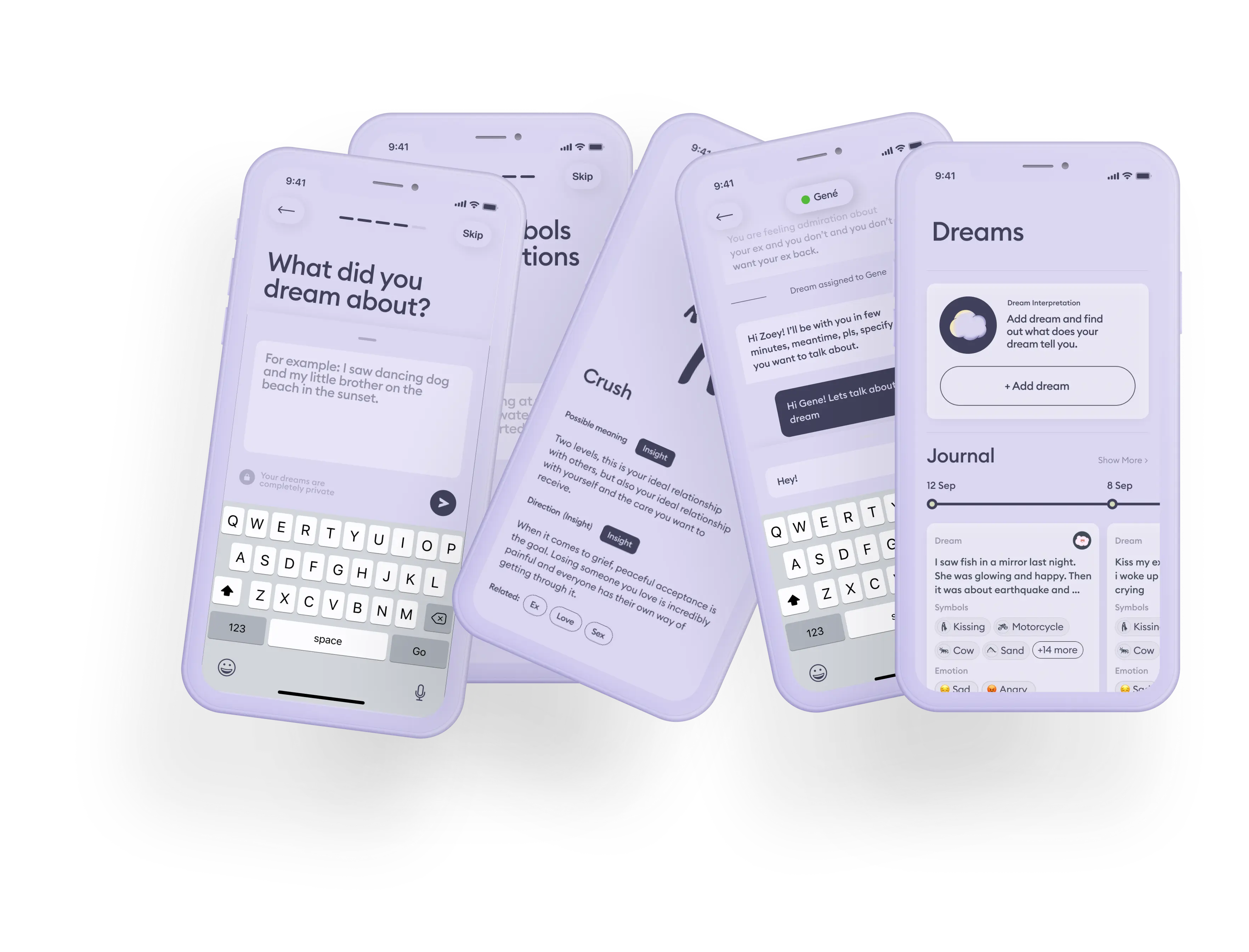
Take control of your dream emotions in the free mobile app


The most recent users' dreams
Go to the user dreams page





















© 2024 Dreamapp Ltd
Follow us on Social:



Dream App
Free dream interpretations

(1,213)