
Denys Chumak
29 Jul 2022
Top 10 Dreams Meaning: What Your Most Common Dreams Are Trying to Tell You
In short: The ten dreams people report most: falling, being chased, teeth falling out, being naked. What each one usually means, and why they are universal.
You keep having the same handful of dreams, or you woke up from one last night that felt too vivid to shake off, and now you are typing some version of this question into a search bar hoping someone can explain it without the fortune-teller routine. Maybe you fell, or ran from something, or showed up to work in your underwear. You are not broken and you are not being warned about anything supernatural. You are having one of the most universally reported dreams on record, and there is a reason it keeps showing up.
The truth is, most of us cycle through the same short list of dream scenarios over a lifetime. Researchers who study dream content across cultures keep finding the same patterns, and that consistency tells you something important: these dreams are tied to how the human brain processes stress, identity, and unfinished emotional business, not to anything unique to you.
What the top 10 dreams commonly mean
Before getting into the specific scenarios, it helps to understand the pattern underneath all of them. The top recurring dreams tend to cluster around a few core human experiences: loss of control, fear of judgment, unresolved relationships, and the pressure of performance. Your brain is not inventing bizarre content at random while you sleep. It is replaying emotional material from your waking life in symbolic form, often exaggerating it so you cannot ignore it.
This is where Freud's early theory and modern research actually agree more than people expect. Freud thought dreams expressed repressed wishes and fears in disguised form. Today's researchers, working from threat-simulation and emotion-regulation models, argue dreams let the brain rehearse difficult scenarios and process feelings that did not get fully dealt with during the day. Different language, similar conclusion: dreams are doing emotional work while you sleep, and the content reflects what is actually weighing on you.
Here is the short version of what the most reported dreams tend to mean before we go deeper:
- Falling: loss of control or stability in waking life
- Being chased: avoidance of a problem or person
- Teeth falling out: anxiety about appearance, aging, or loss of power
- Flying: confidence, freedom, or a desire to rise above a situation
- Naked in public: fear of exposure or judgment
- Showing up late or unprepared: performance anxiety
- Death of someone you know: transition, not literal loss
- Being pregnant: something new developing in your life
- Infidelity, yours or a partner's: trust concerns, not literal prediction
- Lost or unfamiliar houses and rooms: self-exploration, hidden parts of identity
Now let's look at each one closely, because the details of your specific dream usually matter more than the general category.
Scenario variations: the ten dreams broken down
Falling with no landing
This is probably the most universally reported dream experience, and it is often tied to a literal physiological event, a hypnic jerk, as your body transitions into sleep. But psychologically, falling dreams spike during periods when something in your life feels unsteady: a job change, a relationship wobble, financial pressure. The dream rarely needs much interpretation beyond asking yourself, honestly, what currently feels like it is slipping out of your hands.
Being chased by something you can't identify
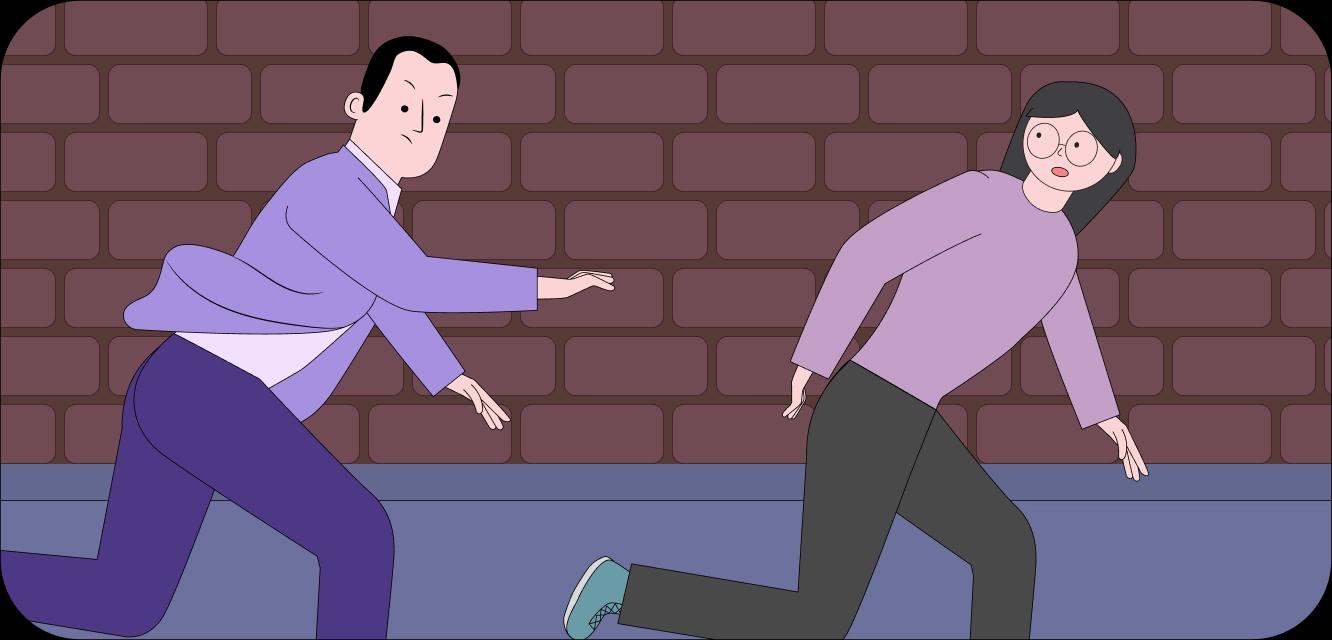
Chase dreams are less about the pursuer and more about your relationship to whatever it represents. If you never see the thing chasing you, that often points to a vague, unnamed anxiety, something you sense but have not consciously identified yet. If the pursuer has a face, a person, an animal, a specific threat, that is usually a more direct clue about what you are avoiding confronting in waking life.
Teeth falling out or crumbling
This one unsettles people more than almost any other dream, probably because it feels so physically real. It shows up frequently during periods of insecurity about how you are perceived, aging, a breakup, a career setback, or any situation where you feel your usual sense of control or attractiveness is compromised. It is rarely about actual dental health, though if it happens constantly alongside jaw pain, it is worth mentioning to a dentist, since teeth grinding during sleep can bleed into dream content.
Flying or soaring above everything
Unlike most of the dreams on this list, flying dreams are often genuinely pleasant, and that matters. They tend to appear when you feel a surge of confidence or when you are consciously trying to gain perspective on a problem, literally rising above it. The emotional tone of the dream, calm and joyful versus frantic and uncontrolled, usually tells you whether this is confidence or a desperate wish to escape something.
Naked or underdressed in public
This is almost always about exposure, feeling seen in a way you did not choose or prepare for. It spikes before big presentations, first dates, new jobs, or any moment where you are being evaluated. Interestingly, in the dream, other people often do not react the way you would expect, which hints that the fear is more about your own self-judgment than anyone else's actual opinion of you.
Showing up late, lost, or completely unprepared
Missing a flight, walking into a final exam you never studied for, forgetting your lines in a play you did not know you were in: these all share a theme of feeling behind or inadequate. They often surface when you are juggling more responsibility than feels manageable, or when old performance pressure from school or early career years gets reactivated by something happening now.
The death of someone you know
This is the one that scares people the most, and it is almost never a prediction or a warning. Dreaming about someone's death usually reflects change, the end of a phase in your relationship with that person, a shift in how close you feel, or sometimes a projection of your own fear of loss. Dream researchers see this constantly: the dream is processing an emotional transition, not forecasting a literal event.
Being pregnant, whether or not it applies to your life
Pregnancy dreams happen to people of every gender and age, which is the first clue they are symbolic rather than literal. They tend to represent something new taking shape, a project, a relationship, an identity shift, that is not fully formed yet but is clearly developing. Anxiety in the dream often mirrors anxiety about whether this new thing will turn out okay.
Infidelity, either yours or a partner's
Few dreams cause more unnecessary panic the next morning than this one. Dreaming about cheating, or being cheated on, usually has very little to do with actual desire or suspicion. It more often reflects a general worry about trust, connection, or feeling emotionally distant from a partner, or sometimes a fear of losing independence within a relationship. It is worth noticing the feeling in the dream, betrayal, guilt, indifference, more than the plot itself.
Wandering through unfamiliar houses or finding hidden rooms
Houses are one of the most consistent symbols across dream research, often standing in for the self. Discovering a room you did not know existed tends to reflect an unexplored part of your identity or potential, something you are only just becoming aware of. A house in disrepair, meanwhile, often mirrors how you feel about your current state of physical or emotional wellbeing.
The psychological view: why these specific dreams recur
Jung's take on this is useful here. He argued that certain dream images are so widespread because they tap into shared human experience, what he called archetypal material, rather than purely personal memory. Falling, being chased, losing teeth: these touch universal anxieties around safety, status, and mortality, which is why they show up across cultures and eras rather than being unique to modern life.
Modern sleep research adds a more practical layer. REM sleep, when most vivid dreaming happens, is tied to emotional memory processing. Your brain is sorting through the day's emotional residue, strengthening some memories, defusing the charge on others. Stressful or unresolved situations tend to generate more vivid, more anxious dream content because there is more emotional material left to process. That is why these ten dreams spike during exam periods, job transitions, grief, and relationship strain. They are not random; they are your brain's maintenance work becoming visible.
There is also a simpler explanation worth not overlooking: repetition itself. If you have had a falling dream before and it scared you, your brain has a template ready to reuse whenever similar stress levels show up again. The dream becomes a kind of emotional shorthand your mind defaults to.
When to pay attention
Most of these dreams are not something to worry about. But there are a few patterns worth noting:
If the same dream recurs nightly or multiple times a week over an extended period, it is often a sign your mind is flagging something you have not consciously dealt with yet. That is worth sitting with rather than dismissing.
If a dream leaves you anxious or shaken well into the next day, rather than fading within an hour of waking, pay attention to what specifically lingers, the emotion, the person involved, the setting. That residue usually points to the real issue underneath the dream's surface content.
If nightmares are frequent enough to disrupt your sleep quality or make you dread going to bed, that crosses from normal dream processing into something worth discussing with a doctor or therapist, particularly if it coincides with a period of trauma, grief, or significant life stress.
And if a dream involves self-harm, harm to others, or feels connected to waking thoughts of harm, that is always worth bringing to a mental health professional, not interpreting alone.
Practical steps for working with these dreams
Start keeping a short dream log, even just two or three sentences written immediately upon waking, before the details fade. You will likely notice your own personal variations on these common themes, and over weeks or months, patterns will emerge that are specific to you rather than generic.
When you log a dream, note the emotion first, then the plot. Fear, embarrassment, relief, guilt, these tell you more about the dream's meaning than the literal events do. A chase dream that feels exciting means something very different from one that feels terrifying.
Ask yourself what was happening in your waking life the day before the dream. Dreams often pull directly from recent events, even mundane ones, and connecting the dots can demystify a dream that otherwise feels ominous.
Resist the urge to treat any single dream as a fixed prediction or verdict. One infidelity dream does not mean your relationship is doomed, and one death dream does not mean tragedy is coming. Treat these dreams as a mirror of your current emotional state, not a crystal ball.
If a particular theme keeps surfacing, use it as a genuine prompt for reflection. A recurring unprepared-for-the-exam dream, for instance, might be worth exploring with the honest question: where in my life do I currently feel behind or not good enough, and is that feeling accurate or inherited from somewhere old.
A quick personal note: I went through a stretch years ago where I had the falling dream almost nightly, right as I was deciding whether to leave a job that no longer fit. Once I actually made the decision, the dream stopped completely, almost overnight. It was a strangely direct confirmation that my mind had been working through something I had not yet admitted to myself during the day.
Frequently asked questions
Do these common dreams mean the same thing for everyone?
Not exactly. The broad themes, falling, being chased, exposure, performance anxiety, are shared across most people because they tap into universal fears. But the specific meaning for you depends on your current life circumstances, the details of the dream, and the emotional tone you woke up with. Two people can have an identical chase dream and be processing completely different stressors.
Why do I keep having the same dream over and over?
Recurring dreams usually signal unfinished emotional business, something your mind keeps flagging because it has not been resolved or consciously addressed. The repetition often stops once the underlying situation changes or once you actively deal with whatever the dream is pointing toward, whether that is a decision, a conversation, or simply acknowledging a feeling you had been avoiding.
Should I worry if my dream involves death or disaster?
Generally no. Dreams about death, falling, or danger are extremely common and almost never predictive. They typically represent symbolic transitions, endings, or anxieties rather than literal future events. The exception is if such dreams are frequent enough to disturb your sleep or daily functioning, in which case it is worth talking to a professional, less because the dream content is dangerous and more because chronic distressing dreams can be a sign of underlying stress or trauma that deserves support.
Explore the dream symbol
Top →
Did you have an unusual dream with this symbol?
Let's analyze this dream with our expert!
At least five words, please.

Your dreams are completely private
Take control of your dream emotions in the free mobile app



The most recent users' dreams
Go to the user dreams page


































© 2024 Dreamapp Ltd
Follow us on Social:



Dream App
Free dream interpretations

(1,213)