
Denys Chumak
13 Sep 2022
Work Anxiety Dreams Meaning: Why Your Mind Replays the Job You Can't Escape
In short: Work anxiety dreams surface when the job has not switched off: missed meetings, unprepared presentations, being late. What each one points to.
You wake up exhausted from a shift you didn't actually work. Maybe you were late for a meeting that doesn't exist, fired from a job you still have, or frozen at a desk while deadlines piled up like snow against a door. The dream felt so real that you reached for your phone to check the time before remembering it was Saturday.
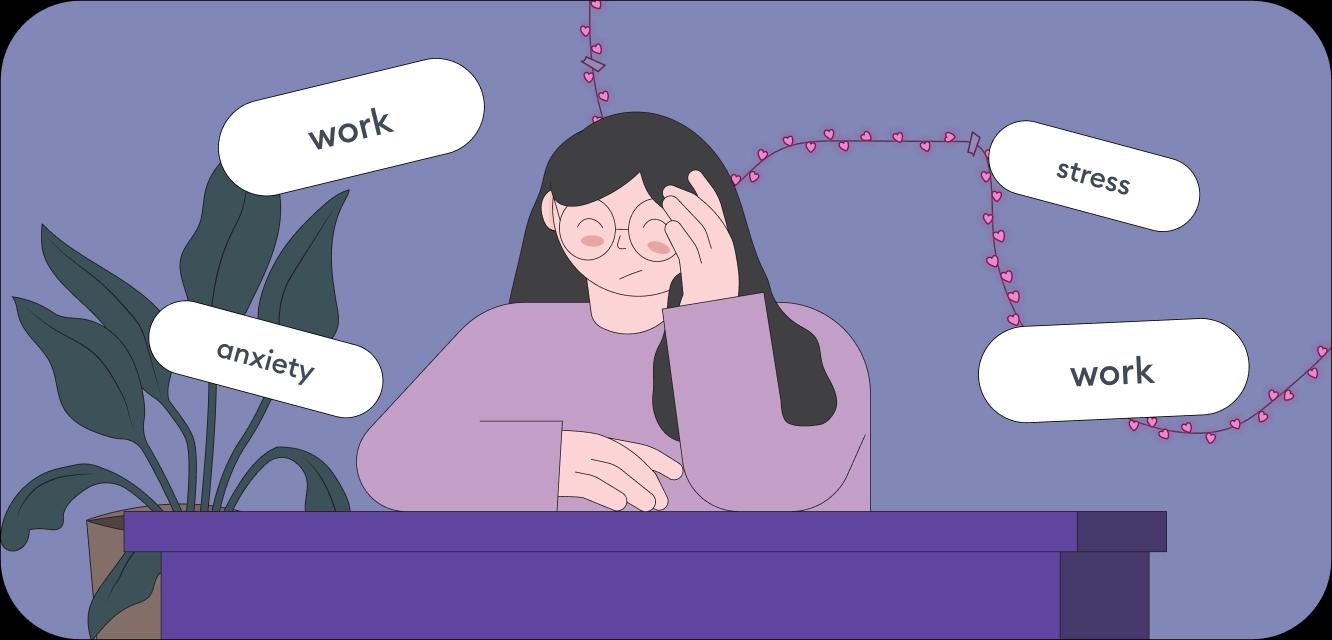
If this keeps happening, you're not imagining things and you're not alone. Work anxiety dreams are among the most common dreams adults report, right up there with falling and being chased. They tend to show up during stressful stretches, but also during quiet ones, which is confusing if you assumed your waking life was fine. Let's look at what these dreams are actually doing, the specific scenarios that show up most, and what helps when the pattern won't quit.
What work anxiety dreams commonly mean
At the surface, these dreams look like rehearsals for failure. You show up unprepared, you miss something important, your boss is disappointed, everything falls apart in front of an audience. It's tempting to read this literally, as a warning that your job performance is actually slipping. Usually it isn't that simple.
Work in dreams often functions as a stand-in for control, competence, and worth. Your job is one of the clearest places in adult life where you're measured, watched, and compared, so your mind borrows that setting to work through anxiety that may have nothing to do with your actual tasks. The deadline you can't meet in the dream might represent a decision you're avoiding. The boss who's furious with you might be a stand-in for your own inner critic. Work in dream imagery rarely stays literal for long; it tends to absorb whatever pressure you're carrying, whether that pressure comes from your career, your relationships, or your own expectations of yourself.
The emotional tone matters more than the plot. A dream where you're scrambling but still functioning points to manageable stress, the kind your mind is actively sorting through. A dream where you're paralyzed, humiliated, or unable to speak points to something heavier, often tied to feeling unseen or unheard in waking life. That underlying current of unease is really what anxiety dreams are built from, regardless of the costume they wear.
Common scenario variations
The setting is almost always work, but the specific plot usually falls into a handful of recognizable patterns. Here's what each one tends to point to.
Being late or unprepared for a meeting
This is the classic anxiety dream. You're sprinting down a hallway, the meeting started without you, or you realize halfway through that you never prepared the presentation everyone's waiting on. This usually reflects a fear of being caught unready, of not measuring up when it counts. It often shows up when you're facing a real evaluation soon, a performance review, a big decision, a conversation you've been putting off. If this one sounds familiar, there's a deeper breakdown in this piece on dreaming about work meetings that's worth reading alongside this one.
Getting fired or laid off
Dreaming about losing your job rarely means your job is actually at risk. More often it reflects a fear of losing your footing, your identity, or your sense of being needed. This dream shows up a lot during life transitions, even positive ones, because change of any kind can shake your sense of security. It also appears when you've been quietly doubting your own competence, even if no one around you has said a word.
Being unable to finish a task no matter how hard you try
You're typing but the screen won't save, you're climbing a ladder that keeps growing taller, you're answering emails that multiply faster than you can clear them. This loop usually points to a feeling of futility, like your effort isn't translating into progress. It's common in people who are overextended, doing more work than their role or energy can sustain, or caught in a job where the goalposts keep moving.
Working at a job from your past
Sometimes the anxiety dream drags you back to a job you left years ago, complete with old coworkers and a boss you haven't thought about in a decade. This often isn't about that job at all. Your mind tends to reuse old settings because they're already wired with strong emotional associations, so if you're feeling undervalued or micromanaged now, your brain might pull up the old office that first taught you what that feeling was like.
Your boss or coworkers turning hostile or strange
A friendly coworker suddenly ignores you, or your boss morphs into someone cold and unreadable. These dreams often reflect uncertainty about where you stand with someone in waking life, not necessarily at work. The dream exaggerates ambiguity into open hostility because your mind is trying to resolve a question you haven't been able to answer while awake: do they actually trust me, do they actually like me, am I safe here.
Showing up to work in the wrong clothes or without clear instructions
This one tends to carry a sharper edge of exposure and shame. You're at your desk in pajamas, or everyone seems to know the dress code except you. It usually points to a fear of being judged for something you couldn't have known or controlled, a feeling of being set up to fail by circumstances outside your hands.
The psychological view
Freud would have pointed to these dreams as wish and fear tangled together, the workplace as a stage where buried worries about adequacy get acted out safely, at a remove from real consequences. Jung took a broader view, seeing recurring dream settings like the office or the job site as symbols of the persona, the public-facing role you play to meet the world's demands. When that role feels threatened in a dream, Jung would say it's often because the persona and the deeper self underneath it have drifted apart. You're performing competence while quietly doubting it.
Modern dream research adds something useful here too. Sleep researchers who study the continuity hypothesis have found that dreams tend to reflect the emotional residue of waking life rather than literal replays of events. Your brain isn't filing a report on your actual job performance, it's processing the feeling-tone of your day, pressure, scrutiny, competition, the fear of letting someone down. Work is simply one of the most emotionally loaded environments most adults move through regularly, so it becomes a natural backdrop for that processing.
There's also a simpler, more physical explanation worth not overlooking. Stress hormones like cortisol affect both your sleep architecture and the emotional tone of your dreams. Higher stress tends to produce more vivid, more negatively charged dreams, especially during the lighter REM periods closer to morning, which is part of why anxiety dreams often arrive right before your alarm goes off, when you're primed to remember them vividly.
I used to get a version of this dream constantly during my first year in a job that genuinely was too much for me, always the same one, standing in front of a whiteboard with instructions I somehow knew I'd been given but could never recall. It stopped almost entirely once I actually asked for clearer expectations at work. That wasn't a coincidence, and it's a decent clue about what these dreams are often trying to flag.
When to pay attention
Most work anxiety dreams are ordinary emotional housekeeping, nothing urgent, nothing diagnostic. But certain patterns are worth noticing rather than brushing off.
If the dream is recurring in a nearly identical form over weeks or months, that's usually a sign your mind hasn't finished processing whatever it's pointing to. One-off anxiety dreams tend to fade once the triggering stress passes; recurring ones suggest the underlying issue is still active.
If you're waking up with physical symptoms, a racing heart, clenched jaw, shallow breathing, that's worth taking seriously as a sign your nervous system is carrying more tension than your waking mind is acknowledging. Dreams can sometimes surface stress before you've consciously registered how much you're carrying.
If the content is shifting toward humiliation, exposure, or being trapped rather than simple unpreparedness, that often reflects a deeper erosion of confidence, not just ordinary deadline pressure. It's worth asking honestly whether something at work, or in your broader sense of competence, has been quietly wearing you down.
And if these dreams are affecting your sleep quality itself, leaving you drained and dreading bedtime, that crosses from a psychological curiosity into something affecting your health, which deserves direct attention rather than analysis.
Practical steps
A few approaches tend to help, depending on what's driving the dream.
First, keep a short dream log for a week or two, just enough to notice the scenario, the emotional tone, and what was happening in your waking life the day before. Patterns tend to jump out once you see them written down rather than held loosely in memory.
Second, separate the setting from the subject. Ask what the dream was actually about underneath the office backdrop: being judged, being unprepared, being replaceable, being unheard. Naming the real theme usually makes it easier to address than trying to fix something literal about your job.
Third, if the dream keeps circling a specific unresolved situation, a conversation you've avoided, a decision you've delayed, a boundary you haven't set, consider whether handling that directly in waking life might do more than any amount of dream analysis. Dreams are good at pointing at a door, less good at opening it for you.
Fourth, build in a wind-down routine before bed that isn't just scrolling work email on your phone. Stress hormones peak partly based on what you're exposed to in the hour before sleep, and reviewing tomorrow's inbox right before you close your eyes is a reliable way to seed more of these dreams.
Fifth, if anxiety is bleeding heavily into your sleep and your days, talking to a therapist isn't an overreaction, it's a reasonable response to a nervous system that's asking for help the only way it currently knows how.
Frequently asked questions
Do work anxiety dreams mean I should quit my job?
Not usually. These dreams reflect emotional pressure, not career verdicts. Plenty of people who love their jobs still have anxiety dreams about them, especially during high-stakes projects or periods of change. Pay more attention to the pattern and timing than to any single dream's plot.
Why do I have these dreams even when things at work are going well?
Because the workplace in a dream is often standing in for something else entirely, like a relationship, a family dynamic, or a private fear about your own adequacy. Your mind reaches for the most emotionally familiar setting it has for pressure and judgment, and for most adults, that's work, even when the actual source of stress lives somewhere else.
Why do these dreams get worse right before a real deadline or review?
Because your brain is doing exactly what it's supposed to do, rehearsing outcomes and processing anticipatory stress while you sleep. This is sometimes called the threat simulation function of dreaming, and it tends to intensify right before high-stakes events, then taper off once the event has passed and the uncertainty resolves one way or another.
Explore the dream symbol
Anxiety →

Did you have an unusual dream with this symbol?
Let's analyze this dream with our expert!
At least five words, please.

Your dreams are completely private
Take control of your dream emotions in the free mobile app


The most recent users' dreams
Go to the user dreams page


































© 2024 Dreamapp Ltd
Follow us on Social:



Dream App
Free dream interpretations

(1,213)