
Denys Chumak
14 Aug 2026
What Dreaming About a Baby Means
In short: Wondering why you keep dreaming about a baby? Here's what it usually reflects about new beginnings, vulnerability, and what you're nurturing in real life.
You woke up still holding the feeling of that baby in your arms, or maybe still hearing it cry, and now you can't stop turning the dream over in your head. Maybe you're not pregnant, don't want to be, or the baby in the dream wasn't even yours. That gap between the dream and your actual life is usually what sends people looking for an answer.
Here's the reassuring part first: dreaming about a baby almost never predicts an actual pregnancy. It's one of the most common dream symbols there is, and it shows up across every age, gender, and life stage. What it tends to reflect is something newer and more vulnerable happening inside you right now, not necessarily a literal child.
What Dreaming About a Baby Commonly Means
Across dream research and clinical work, babies in dreams tend to represent something in its early stages. That could be a project, a relationship, an idea, a version of yourself, or an emotional need that hasn't fully developed yet. Babies are helpless and entirely dependent on care, so your unconscious mind often reaches for that image when it wants to flag something in you that feels new, fragile, or in need of protection.
The condition of the baby, and what happens to it, usually carries the real message. A calm, healthy baby often points to something in your life that's growing well, even if slowly. A crying, sick, or endangered baby usually signals anxiety about your ability to care for something, whether that's a relationship, a responsibility, or a part of your own identity you're still working out. You can read more general context on the baby symbol page if you want the broader dream dictionary view before getting into specifics.
It also matters whether the baby feels like it belongs to you. A dream where you're caring for your own baby often points inward, toward something you personally are nurturing or worried about neglecting. A dream where the baby belongs to someone else, or appears without explanation, can point to something happening around you that you feel responsible for anyway.
Common Scenarios and What They Might Suggest
Dreams rarely deliver a single, tidy image. The details, who the baby is, what it's doing, how you feel, are where the meaning usually lives. Here are the variations that come up most often.
A Crying Baby You Can't Soothe
This is one of the more distressing versions, and understandably so. A baby crying and crying while you feel powerless to help often mirrors a real situation where you feel like you're falling short, whether that's at work, in a relationship, or with a goal you started but haven't been able to sustain. It's less about failure and more about the exhaustion of trying to meet a need that keeps demanding more than you have to give right now.
Dropping, Losing, or Forgetting a Baby
These dreams tend to shake people the most, and they're extremely common, so if this is you, you're not alone in it. Losing or forgetting a baby in a dream usually reflects a fear of neglecting something important, not a literal warning. It often shows up during periods when your attention is split too many ways, when you're juggling responsibilities and worried something (or someone) is getting less care than it deserves. If the baby dies in the dream, that's worth a closer look too, and you can find a deeper breakdown in this piece on the meaning of a dead baby dream, which covers the emotional and symbolic layers in more depth.
Dreaming of a Baby Girl or Baby Boy
Sometimes the sex of the dream baby stands out and feels significant. Traditionally, a baby girl in a dream has been linked to intuition, emotional growth, or a softer, more receptive new beginning, while a baby boy has been associated with action, assertion, or a new direction you're about to take. These associations are cultural shorthand more than fixed rules, so it's worth checking whether the gender matches something specific in your waking life, a project, a relationship, a personal trait, that you'd naturally describe in similarly gendered terms.
Breastfeeding a Baby
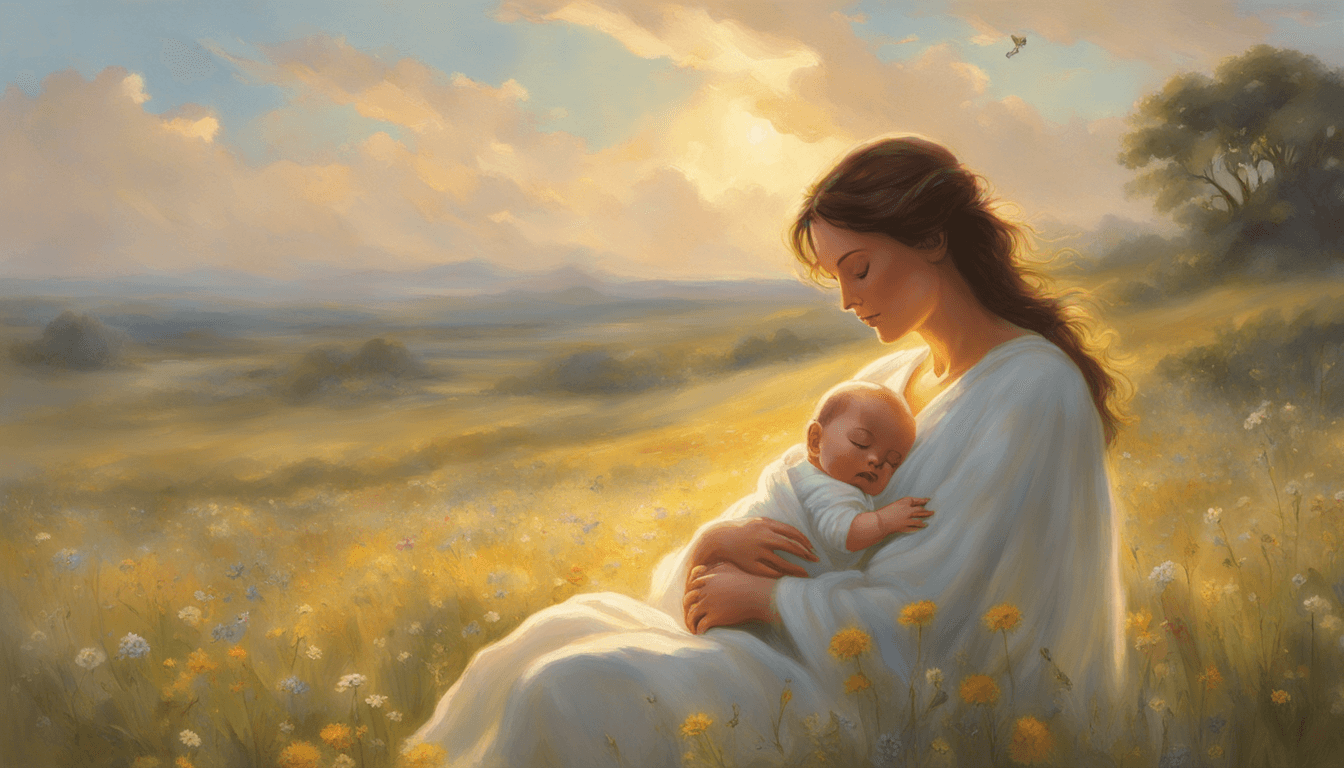
If your dream involved breastfeeding a baby, it often points to nurturing on a deeper, more intimate level. This can reflect how much of yourself you're giving to a person, idea, or responsibility, and whether that exchange feels sustaining or depleting. Some people have this dream during periods of genuine self-sacrifice, when they're pouring energy into someone else's growth and quietly wondering what's left for them.
A Baby Doll Instead of a Real Baby
A baby doll appearing in place of an actual infant is worth noting on its own. Dolls are imitations, something that looks like care and nurturing without the full emotional weight behind it. This dream sometimes surfaces when you suspect a relationship or commitment in your life is more performance than substance, or when you're going through the motions of caretaking without feeling truly connected to it.
Suddenly Having a Baby You Weren't Expecting
Dreams about unexpectedly having a baby, especially ones where you're confused about how it happened, often relate to a sense that something in your life is moving faster than you're ready for. This shows up a lot around new jobs, new relationships, or new obligations that arrived before you felt fully prepared. It's less about the baby itself and more about the disorientation of sudden responsibility.
Some people also dream about baby birds rather than human infants, which tends to carry a lighter, more hopeful tone, often tied to independence, fragile new confidence, or watching something you've nurtured start to test its own wings. If that's closer to your dream, the baby birds symbol page covers that angle specifically.
The Psychological View
Freud generally read baby dreams through the lens of wish fulfillment, tying them to desires around fertility, family, or unmet emotional needs from childhood. Jung took a broader view, seeing the baby as an archetype of the Self, a symbol of psychological rebirth, wholeness, or the emergence of a new identity that hasn't fully formed yet. In Jungian terms, dreaming of a baby can mean part of you is being reborn, a new outlook, a new phase of maturity, a new way of relating to yourself.
Modern dream research leans more toward continuity theory, the idea that dreams largely reflect whatever is emotionally active in your waking life rather than hidden symbolic messages. From that angle, a baby dream is often your mind processing real feelings about responsibility, vulnerability, or change, using the most universally understood image of dependency it has available. I remember a friend going through a career pivot who kept dreaming about caring for an infant with no idea whose it was. She wasn't thinking about parenthood at all, she was thinking, every day, about whether she could actually protect and grow this risky new business idea she'd committed to.
Both views point to a similar place: the baby is rarely literal. It's a stand-in for something young, unfinished, and in need of your attention.
When to Pay Attention
Most baby dreams are simply your mind sorting through everyday stress about care and responsibility, and they don't require any action. But it's worth paying closer attention if a few things are true.
First, if the dream repeats often, especially with the same distressing details, like the baby always crying or always in danger, that repetition usually means the underlying worry hasn't been addressed in waking life. Second, if you wake up with strong physical anxiety, a racing heart, tightness in your chest, that's a signal your mind is working through something with real emotional weight, not background noise. Third, if the dream lines up with an actual life transition, a new relationship, a new job, a health change, a shift in caregiving duties, the dream is likely commenting directly on how prepared or unprepared you feel for that change.
On the other hand, if the dream felt peaceful, if the baby was calm and well cared for, that's usually a sign your mind is registering steady progress somewhere, not a warning at all.
Practical Steps
If a baby dream is sticking with you, a few simple steps tend to help more than overanalyzing the symbolism.
Start by writing down the dream in as much detail as you can remember, especially the emotional tone, since the feeling in the dream usually matters more than the literal events. Then ask yourself plainly what in your life currently feels new, fragile, or dependent on your care. It might be a relationship, a habit you're building, a creative project, or even a part of your personality you're trying to grow.
Next, notice whether the dream's emotional tone, anxious, tender, overwhelmed, matches how you feel about that thing in waking life. If you dreamed of struggling to care for a crying baby and you're also struggling to keep up with a demanding new role at work, that connection is probably not a coincidence.
Finally, use the dream as a prompt rather than a prophecy. Ask what one small action you could take this week to give that fragile new thing a bit more attention or support. Dreams rarely hand you instructions, but they're good at showing you where your attention already wants to go.
Frequently asked questions
Does dreaming about a baby mean I'm actually pregnant?
No, this is one of the biggest misconceptions around this dream. Baby dreams are extremely common in people who aren't pregnant, aren't trying to be, and have no plans to be. They're far more often tied to symbolic new beginnings, responsibilities, or emotional growth than to an actual pregnancy.
Why do I keep dreaming about the same baby over and over?
Recurring baby dreams usually point to an ongoing concern that hasn't been resolved, something you're actively nurturing, protecting, or worrying about in waking life. The repetition tends to fade once the underlying situation stabilizes or you consciously address the worry behind it.
Is it bad if the baby in my dream feels unsafe or gets hurt?
Not inherently. These dreams are usually a reflection of anxiety about neglecting something important, not a prediction of harm. They're worth paying attention to as an emotional signal, but they're not a warning about an actual child or event.
Explore the dream symbol
Baby →Related Articles
Did you have an unusual dream with this symbol?
Let's analyze this dream with our expert!
At least five words, please.

Your dreams are completely private
Take control of your dream emotions in the free mobile app


The most recent users' dreams
Go to the user dreams page













© 2024 Dreamapp Ltd
Follow us on Social:



Dream App
Free dream interpretations

(1,213)