
Denys Chumak
03 Nov 2026
Robins in Dreams: What They Really Symbolize
In short: Robins in dreams symbolism meaning often centers on hope, transition, and new beginnings. Here is what different robin dreams tend to reveal about your life.
Maybe you woke up still picturing that flash of rust-orange breast and a bright, cheerful song, and now you can't stop wondering why your mind served up a robin of all things. Or perhaps the dream wasn't cheerful at all, a dead robin, a bird slamming into glass, something that left you unsettled rather than charmed. Either way, you're not imagining things. Robins show up in dreams more often than people expect, and they tend to carry a fairly consistent emotional signature once you know how to read it.
This guide walks through what robin dreams commonly mean, the specific scenarios that change the interpretation, what psychology says about why birds appear in dreams at all, and how to actually use the symbol instead of just wondering about it.
What a Robin Dream Commonly Means
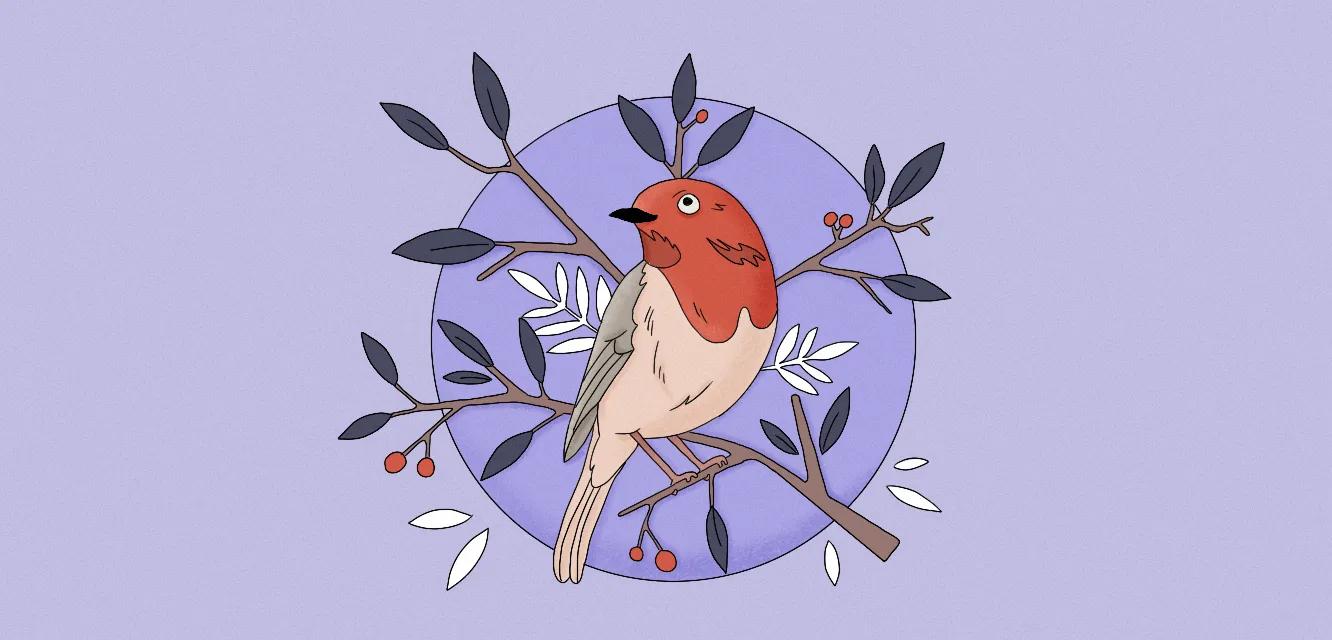
Robins are, culturally and biologically, a signal of transition. They arrive as winter loosens its grip, which is probably why they've been linked to renewal across so many traditions for so long. When one shows up in a dream, it's rarely random filler. Your mind tends to reach for familiar, emotionally loaded images when it's processing something related to change, hope, or vulnerability, and the robin fits that job description well.
Most robin dreams cluster around a few themes: a fresh start you're either anticipating or resisting, a need to protect something tender (a relationship, a project, your own emotional state), or a reminder that a difficult season is ending. The specific feeling in the dream matters more than the bird itself. A robin that feels warm and welcome usually points to optimism breaking through. A robin that feels frantic, trapped, or injured usually points to anxiety about a transition you haven't fully accepted yet.
It also helps to notice what else is happening in the dream. Color, behavior, and setting all shift the meaning, which is why the scenario breakdown below is worth reading even if you think you already know what your dream meant.
Common Robin Dream Scenarios
A Robin Flying High or Singing Freely
This is the version most people wake up from feeling good, and for reason. A robin in flight, especially one singing or moving with ease, tends to reflect a sense that you're about to catch a break. It can also mean you already have the information or opportunity you need, you just haven't acted on it yet. If this was your dream, pay attention to what you've been putting off. The dream may be less a prediction and more encouragement to actually take the step.
A Robin Flying Into a Window
This one tends to stick with people because it's jarring. A robin hitting glass often shows up during periods when you sense good news or a good opportunity, but feel like something is physically blocking you from reaching it. The window is the key image here, not the bird. Ask yourself honestly what the glass represents. Is it a fear, an old habit, a relationship you haven't been willing to leave? Birds colliding with windows in dreams are frequently tied to a part of you that already knows change is coming and is, quite literally, trying to break through.
A Dead Robin
Understandably, this is the scenario that worries people most. A dead bird in a dream is almost never a literal warning. Dream researchers generally treat death imagery as symbolic of an ending rather than a prediction, often the close of a phase, a relationship, or a version of yourself you're outgrowing. If you dreamed of a dead robin, it may be worth sitting with what recently ended or what you've been afraid to let end. The dream might be processing grief you haven't named yet, or bracing you for a loss that's already underway. For more on how death symbolism functions across dreams generally, see dream analysis and what your mind is really processing.
A Robin's Nest or Eggs
Nests and eggs point toward something being built rather than finished. If you dreamed of finding a robin's nest, especially one with eggs intact, it often reflects a project, relationship, or idea that's still fragile and early. The dream is frequently a nudge to protect that thing, to be patient with it, and not to rush it into the world before it's ready. A disturbed or empty nest can suggest anxiety about something you're responsible for feeling unstable or unprotected.
A Robin Inside Your House
A bird indoors tends to carry more intensity than one outside, because the setting itself suggests the symbolism is personal rather than general. A robin inside your home in a dream often relates to a change happening within your private life, your family, your sense of self, rather than the wider world. It can also point to a feeling that something hopeful has entered your life but you're not sure what to do with it now that it's there.
Multiple Robins or a Flock
Seeing several robins at once, rather than one, usually shifts the meaning from personal transition toward something more collective. This can show up during times when you're part of a group going through change together, a workplace shift, a family transition, a community event. It can also simply amplify the individual meaning, so if one robin suggests hope, a flock may be underscoring that the feeling is strong and widespread in your current life.
The Psychological View
Freud tended to read animal dreams through a lens of instinct and repressed desire, suggesting that birds in particular could represent freedom, sexuality, or an urge to escape constraint. It's a reading that still has some currency, especially if your robin dream involved a sense of longing or restlessness.
Jung took a different route, and his framework tends to fit robin dreams more naturally. He saw birds as symbols of transcendence, the part of the psyche capable of rising above a current conflict or limited perspective. In this view, a robin isn't just decoration, it's a messenger from the unconscious, often appearing right when you're on the edge of some kind of psychological shift, whether that's accepting a loss, starting something new, or integrating a part of yourself you've been avoiding.
Modern dream research, less interested in symbolism and more focused on function, suggests dreams often process emotional material from the previous day or week, especially anything tagged as significant but unresolved. If you've been anxious about a new job, a move, a relationship ending or beginning, a robin may simply be the image your brain reached for to represent transition because that's culturally how robins are coded for most people. None of these views contradict each other. They're different lenses on the same underlying pattern: robins show up when something in you is shifting.
If you want a broader primer on how to approach interpretation generally, rather than symbol by symbol, this guide to dream interpretation is a useful place to start.
When to Pay Closer Attention
Most robin dreams are not urgent. But there are a few patterns worth noticing if they keep recurring.
If you keep dreaming of dead or injured robins over weeks or months, it may be worth asking whether you're avoiding grief or an ending you know is coming but haven't let yourself feel. Recurring dreams often persist precisely because the underlying emotion hasn't been processed while awake.
If the robin dreams consistently involve anxiety, panic, or a sense of being trapped, particularly the window-collision variety, it can be a sign that you're sensing an opportunity or necessary change but feel stuck. That's worth examining honestly rather than waiting for the dream to resolve itself.
And if a robin dream leaves you with a strong, specific feeling you can't shake days later, that persistence is usually the more reliable signal, more than the symbol itself. Dreams that fade immediately are often just noise. Dreams that linger tend to be pointing at something real.
Practical Steps for Working With a Robin Dream
Start by writing down the dream in as much detail as you can remember, ideally right after waking, before the details blur. Note not just what happened but how you felt, since the emotional tone usually carries more interpretive weight than the plot.
Next, look at what's actually happening in your waking life around the time of the dream. Robin dreams cluster around transitions, so ask yourself honestly what's ending, beginning, or stuck right now. A dream rarely invents a feeling out of nowhere, it usually reflects something you're already sensing but haven't named.
If the dream involved a specific scenario, a window, a dead bird, a nest, go back through the relevant section above and sit with the questions it raises rather than the general meaning. Generic symbolism is a starting point, not the whole answer.
Finally, resist the urge to treat the dream as a literal omen. Even in traditions where robins are considered lucky or spiritually significant, the more useful reading treats the bird as a mirror for something already in motion inside you, not a prediction about the external world. I remember dismissing a dream like this myself for a long time, a robin kept showing up the same week I was deciding whether to leave a job, and it wasn't until I actually sat with it that I realized the dream wasn't telling me anything new, it was just reflecting a decision I'd already half made.
Frequently Asked Questions
What does it mean to dream about a robin?
It usually points to a transition you're moving through or anticipating, often tied to hope, renewal, or a fresh start. The specific meaning depends heavily on how the robin behaves in the dream and how you felt watching it, with calm or joyful dreams generally reflecting optimism and anxious ones reflecting resistance to change.
Is a dead robin in a dream actually a bad omen?
Not in any literal sense. Dream researchers tend to treat death imagery as symbolic of an ending rather than a forecast of real-world misfortune. A dead robin more often reflects a phase of life, a relationship, or a version of yourself that's winding down, and the dream is helping you process that rather than warning you about the future.
Why do robins specifically show up in dreams instead of other birds?
Robins carry strong cultural associations with the end of winter and the start of spring, which makes them an easy, familiar symbol for the mind to reach for when processing themes of renewal or change. Because most people already associate robins with hope and new beginnings, the unconscious tends to borrow that existing meaning rather than invent a new one from scratch.

Did you have an unusual dream with this symbol?
Let's analyze this dream with our expert!
At least five words, please.

Your dreams are completely private
Take control of your dream emotions in the free mobile app


The most recent users' dreams
Go to the user dreams page


© 2024 Dreamapp Ltd
Follow us on Social:



Dream App
Free dream interpretations

(1,213)