
Denys Chumak
30 Oct 2026
Dream About Climbing a Mountain: What It Symbolizes
In short: A dream about mountains usually points to ambition, obstacles, or how you handle a slow climb toward a goal. Here is what the details in your dream reveal.
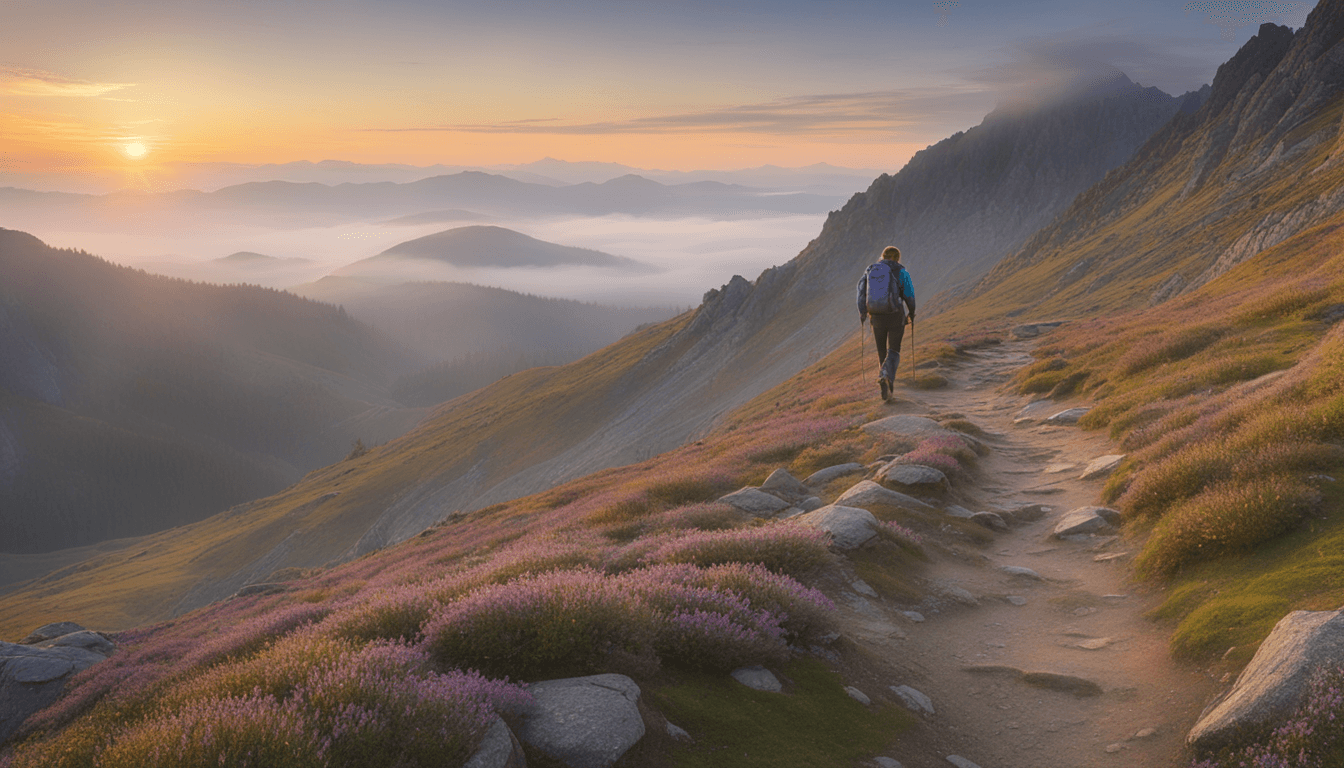
You wake up still feeling the burn in your legs, the thin air, the strange mix of dread and determination that came with staring up at a slope that never seemed to end. Maybe you reached the summit. Maybe you didn't. Either way, something about that dream stuck with you, and you're wondering if it means you're overwhelmed, ambitious, stuck, or all three at once.
Dreams about mountains are some of the most common dreams adults report, and for good reason. Mountains are one of the oldest symbols we have for effort, achievement, and the distance between where we are and where we want to be. But the meaning changes a lot depending on the specifics: whether you're climbing or descending, whether you reach the top, who's with you, and how your body feels along the way. Let's get into what your particular version might be telling you.
What a mountain dream commonly means
At the broadest level, a mountain in a dream represents a goal, a challenge, or a stage of personal growth that feels big and slow. Unlike a dream about running from something, which usually points to anxiety you're avoiding, a mountain dream tends to be about something you are actively moving toward, even if the progress feels painfully slow.
Psychologically, mountains sit in that category of dream symbols tied to ambition and self-development. Carl Jung often spoke about the process of individuation, the lifelong work of becoming a fuller version of yourself, as something that happens in stages, with setbacks and plateaus along the way. A mountain climb maps onto that process almost too neatly: the switchbacks, the false summits, the moments where you can't see how much further you have to go.
Freud, on the other hand, might have pointed to the more literal, bodily experience of the dream. The strain in your legs, the shortness of breath, the vertigo. These physical sensations in dreams often reflect something happening in waking life that feels similarly taxing: a demanding job, a relationship that requires constant effort, a health goal you're chasing.
Modern dream researchers tend to land somewhere in between. They see mountain dreams as a kind of emotional rehearsal. Your brain is working through how you feel about a current challenge, not predicting the future, but processing the weight of what you're carrying right now. If you've been under pressure to perform, hit a deadline, or prove something to yourself, a mountain is a natural shape for your mind to reach for.
Common variations and what they suggest
The general meaning is useful, but the details in your dream usually carry more specific information. Here are some of the most common versions people report.
Climbing a mountain and reaching the top
If you made it to the summit, pay attention to how you felt once you got there. Relief and pride usually suggest you're close to completing something significant in waking life, or that you've recently cleared a hurdle that felt impossible at the start. But if the top felt anticlimactic or lonely, that's worth noticing too. It can mean you're worried that achieving a goal won't bring the satisfaction you expect, a very common and very human fear.
Climbing but never reaching the summit
This is one of the most frequently reported versions, and also one of the most frustrating to wake up from. Dreams where the mountain keeps growing, or the path keeps looping back on itself, often reflect a goal that feels perpetually out of reach. This shows up a lot during long job searches, drawn-out creative projects, or periods of recovery from illness or burnout. The dream isn't telling you to give up. It's mirroring the exhaustion of effort without visible payoff.
Falling off a mountain
Falling dreams in general tap into a fear of losing control, and a fall from a mountain specifically can point to anxiety about failing publicly after investing a lot of effort. If you've taken a big risk lately, a new job, a public commitment, a financial bet, this version can surface as your mind rehearsing the worst-case outcome. It's uncomfortable, but it's rarely predictive. It's processing, not prophecy.
Watching someone else climb while you stay behind
This variation often points to comparison. You might be measuring your progress against someone else's, a sibling, a coworker, a friend who seems to be moving faster toward a goal you both share. It can also show up when you feel like you've been left out of an opportunity. Worth asking yourself honestly: who was climbing, and what do they represent to you?
Being stuck or unable to move on the mountain
Dreams where your legs feel like lead, or you simply cannot make progress no matter how hard you try, are closely related to feeling paralyzed in other dream contexts. This often reflects a real situation where you feel blocked, whether by circumstances outside your control, self-doubt, or a decision you're avoiding. The mountain isn't the problem here. The stuckness is.
A mountain appearing calm, beautiful, or in the distance
Not every mountain dream is about struggle. Sometimes a mountain appears peacefully in the background, snow capped and distant, almost like scenery. This version tends to show up when you're in a stable period and the "mountain" represents a long-term goal you're not actively climbing yet, but thinking about. It can be a quiet signal that you're ready to set a new intention, even if you haven't started moving toward it.
The psychological view: ambition, effort, and the shape of struggle
It helps to think about why mountains, specifically, show up as a dream symbol at all. We don't usually dream about flat, easy tasks. Nobody dreams about folding laundry as a metaphor for personal growth. We dream about mountains because they capture something true about how effort actually feels: uneven, exhausting, occasionally beautiful, and almost always slower than we want it to be.
Jungian dream work would ask you to consider the mountain as an archetype, a symbol that shows up across cultures and centuries because it taps into something universal about the human experience of striving. In myth and religion, mountains are where people go to meet something greater than themselves, Moses on Sinai, monks in the Himalayas, the gods on Olympus. Your dreaming mind may be borrowing that same symbolic weight to describe something that feels equally significant in your own life, even if, to an outside observer, it's just a work project or a personal goal you haven't told anyone about.
From a more cognitive angle, sleep researchers who study dream content note that our dreams often exaggerate the emotional tone of whatever we're preoccupied with during the day. If you've been thinking about a long-term goal, even passively, your brain may render that preoccupation as an actual physical landscape, because spatial metaphors are deeply wired into how we think about progress. We say things like "I'm climbing the ladder" or "I've hit a wall" or "I'm over the hump" without even noticing how physical that language is. Dreams just take the metaphor literally and put you inside it.
One small personal note: I went through a stretch a few years back where I kept dreaming about the same unfinished trail, never the summit, just an endless incline. It took me embarrassingly long to connect it to a manuscript I'd been avoiding finishing. The dream wasn't subtle. I just wasn't ready to hear it yet.
When a mountain dream deserves more attention
Most mountain dreams are ordinary processing and don't require any action beyond a little reflection. But there are a few signs worth paying closer attention to.
If the dream recurs frequently, especially the version where you never reach the top or feel stuck partway up, it may be worth asking whether you're avoiding a decision in waking life rather than just working toward a slow goal. Avoidance and genuine slow progress can feel similar in a dream, but they call for different responses.
If the dream carries intense physical dread, chest tightness, panic, a feeling of suffocation at altitude, it may be tied to anxiety that's bigger than the specific goal the mountain represents. In that case, the dream is less about ambition and more about how overwhelmed you feel generally. That distinction matters for how you respond to it.
And if you notice the dream shifting over time, say, you used to dream of climbing alone and now you dream of climbing with help, or the mountain used to look impossibly tall and now looks more manageable, that shift is worth noting. Dreams can track real change in how you relate to a challenge, almost like a slow-motion check-in with yourself.
Practical steps to work with the dream
You don't need to overanalyze a single dream, but if a mountain dream has stuck with you, a few simple steps can help you get something useful out of it.
Start by writing down the details while they're fresh: were you climbing alone or with others, did you reach the top, how did your body feel, what was the weather like. These details fade fast, and they carry most of the useful information.
Next, ask yourself what "mountain" is currently active in your waking life. It doesn't have to be dramatic. It could be a work goal, a creative project, a health routine, or even a difficult conversation you've been putting off. Name it specifically rather than leaving it abstract.
Then compare the emotional tone of the dream to how you actually feel about that goal. If the dream felt hopeful and you feel genuinely hopeful too, the dream is likely just reflecting reality back at you, nothing urgent to change. But if the dream felt heavier or more hopeless than you consciously feel, that gap is worth sitting with. It might be telling you something you haven't fully admitted to yourself yet.
Finally, if you're someone who dreams in recurring landscapes or symbols, it can help to keep a running log over time rather than looking at dreams in isolation. Patterns tend to say more than single dreams do. You can browse common dream symbols to see how mountains relate to other recurring images like falling, being chased, or losing control, since dreams rarely use just one symbol in isolation.
Frequently asked questions
Does dreaming about a mountain mean something bad is coming?
No. Mountain dreams are almost never predictive in a literal sense. They tend to reflect how you currently feel about effort, ambition, or a challenge you're facing, not a forecast of future events. The emotional tone of the dream, hopeful versus dreadful, usually says more about your current mindset than about anything external that's about to happen.
Why do I keep having the same mountain dream over and over?
Recurring dreams, including recurring mountain dreams, typically point to an unresolved feeling or situation that your mind keeps returning to because it hasn't been fully processed or addressed. If the mountain dream repeats, it's worth asking what goal, decision, or source of pressure has been consistently on your mind, even if you haven't been actively thinking about it during the day.
What does it mean if I dream about climbing a mountain with someone else?
Who you're climbing with matters a lot. If it's someone supportive in waking life, the dream may reflect feeling backed up or less alone in a current challenge. If it's someone you have tension with, or someone who seems to be climbing faster or easier than you, the dream may be surfacing comparison, competition, or a need for support you haven't asked for directly.

Did you have an unusual dream with this symbol?
Let's analyze this dream with our expert!
At least five words, please.

Your dreams are completely private
Take control of your dream emotions in the free mobile app



The most recent users' dreams
Go to the user dreams page






























© 2024 Dreamapp Ltd
Follow us on Social:



Dream App
Free dream interpretations

(1,213)